



Why Firearms and Tactics Training Must Start with Discipline


Close protection in a hostile environment is one of the most serious areas of professional security training. It is not ordinary bodyguard training with more dramatic scenarios added. It is a specialist area that requires maturity, discipline, safety, legal awareness, teamwork, communication, and controlled decision-making under pressure.
When firearms and tactics are introduced into close protection training, the responsibility becomes even greater. A weapon must never become the centre of the operation. The principal remains the mission. The team’s role is to protect life, preserve control, and move the principal away from danger by the safest available means.
This is why hostile-environment firearms and tactics training must begin with discipline rather than aggression. The purpose is not to glorify weapons, force, or confrontation. The purpose is to develop safety-conscious protection professionals who understand that every action must be lawful, necessary, proportionate, authorised, and accountable.
A professional close protection operative must know how to think before acting. In hostile environments, pressure can come quickly. The team may face uncertainty, confusion, noise, movement, crowds, vehicles, casualties, or a rapidly changing threat picture. Without discipline, this pressure can lead to poor decisions. With proper training, learners can develop a structured response based on safety, communication, movement, and extraction.
The foundation of this type of training is weapon safety. Before any learner can be trusted to apply tactical skills, they must first demonstrate safe handling, muzzle awareness, trigger discipline, safe loading and unloading under supervision, range discipline, stoppage awareness, maintenance responsibility, and respect for local rules and lawful authority. Confidence is not enough. Safety must be repeatable, observable, and consistent.
A second foundation is judgement. Firearms and tactical drills must never replace planning, route selection, behavioural awareness, communication, or avoidance. In many situations, the safest response may be to move the principal, use cover, enter a vehicle, change direction, withdraw, or avoid the contact altogether. A weapon is only one tool within a wider protective system, and it must only be used where there is no safer lawful alternative.
Hostile-environment training also needs to address team movement. Close protection is not an individual activity. The operative must understand where the principal is, where the team is, where the driver is, where the exit route is, and where innocent people may be located. In a serious incident, poor coordination can create as much danger as the original threat.
Learners must therefore practise communication, spacing, body cover, movement to safety, and extraction as part of a team.
Foot tactics and vehicle tactics are important because hostile incidents rarely happen in ideal conditions. A team may need to move a principal through a venue, across open ground, into a vehicle, away from a contact point, or towards a safe haven. Vehicle movement, embus and debus procedures, route selection, casualty extraction, and communication with drivers all form part of the wider protective response.
The professional standard is simple: the team must not become distracted by the threat at the expense of the principal. If everyone turns towards the problem and nobody moves the principal, the protection mission has failed. Firearms training in a close protection context must therefore support extraction, not replace it.
Another key point is accountability. Learners must understand the legal, moral, and operational consequences of force. Any use of force must be explainable afterwards. Why was it necessary? What threat was present? What alternatives were considered? What was done to protect the principal, the team, and the public? Professional training should prepare learners to think about these questions before an incident ever occurs.
This type of course is not suitable for casual or irresponsible learners. It should be delivered only in lawful, authorised, and properly supervised training environments, with qualified instructors, approved safety procedures, and clear rules. The subject matter is serious, and the training culture must reflect that seriousness.
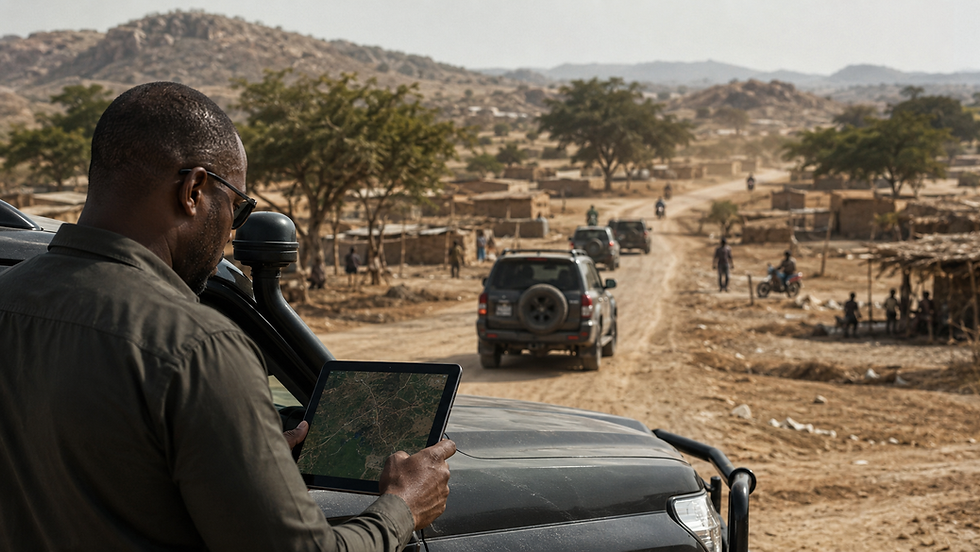
For Africa-based security professionals, hostile-environment close protection training can be particularly relevant where personnel may support government teams, corporate executives, visiting delegations, media teams, or high-profile individuals operating in challenging environments. However, the African context also demands restraint, cultural awareness, local legal understanding, and realistic adaptation. Training must never become imported theatre. It must prepare learners for responsible professional conduct in real operating conditions.
The best hostile-environment close protection training does not create aggressive people. It creates controlled people. It develops operatives who can remain calm, communicate clearly, move as a team, protect the principal, control the weapon, and extract to safety.
In professional close protection, success is not measured by drama. It is measured by whether the principal, the team, and innocent people are moved away from danger with discipline, control, and the minimum necessary force.
Call to action: The Professional Bodyguard Association’s Close Protection in a Hostile Environment – Firearms and Tactics training is designed to develop disciplined, safety-conscious, judgement-led protection personnel who understand that the principal is always the mission.


Comments