


Established in the United Kingdom in 2008 | Company # 06727773


Further details
The QNUK Level 3 Award for Media Safety Advisors (RQF) is designed for security professionals, close protection operatives, hostile environment practitioners, emergency response personnel and those supporting journalists or production teams working in challenging, unfamiliar or high-risk environments.
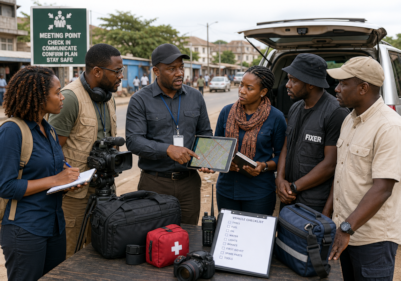
Media teams often operate in fast-moving situations where the story is developing, the environment is uncertain, and risks can change quickly. A Media Safety Advisor provides the planning, judgement and safety oversight needed to help journalists, camera crews, producers and photographers carry out their work while reducing avoidable risk.
This course introduces learners to the role of the Media Safety Advisor before, during and after deployment. It covers pre-deployment planning, risk assessment, contingency planning, location safety, situational awareness, communication, route planning, vehicle selection, driver vetting, grab bag preparation, cyber safety, personal security and emergency response.
Learners will also explore the realities of working around demonstrations, civil unrest, hostile environments, conflict areas, local communities, fixers, translators, drivers, police, military or security forces. The course examines how to make safe decisions under pressure, how to recognise escalation, how to brief media teams, and when to move, pause, withdraw or seek further support.
A strong focus is placed on practical field safety. This includes understanding team dynamics, fatigue, morale, cultural awareness, local laws, hostile surveillance, transport risks, compound security, kidnap and hostage awareness, post-operation reporting and post-deployment welfare.
The role of the Media Safety Advisor is not to stop journalists doing their job. It is to help them do it safely, professionally and responsibly. The MSA supports the story by protecting the people behind it.
By the end of the course, learners should have a stronger understanding of how to plan and support media deployments, manage risks in dynamic environments, maintain team safety, communicate clearly, respond to incidents and contribute to safer media operations.
Core areas covered include:
· Role and responsibilities of the Media Safety Advisor
· Media team roles and production awareness
· Professional etiquette and communication
· Risk assessment and contingency planning
· Pre-deployment preparation
· Situation reports and communication plans
· Grab bag preparation
· Personal security and situational awareness
· Anti-surveillance awareness
· Cyber safety in the field
· Vehicle selection and safety checks
· Driver vetting and route planning
· Convoy and remote-area travel considerations
· Operating around protests and civil unrest
· Police, military and security-force awareness
· Working with fixers, translators and local staff
· Embedding considerations
· Kidnap, hostage and ransom awareness
· Emergency response and evacuation planning
· Post-operation reporting and debriefing
The standard expected throughout the course is clear:
Plan properly. Stay aware. Communicate clearly. Protect the team. Respect the story. Manage the risk. Get everyone home safely.